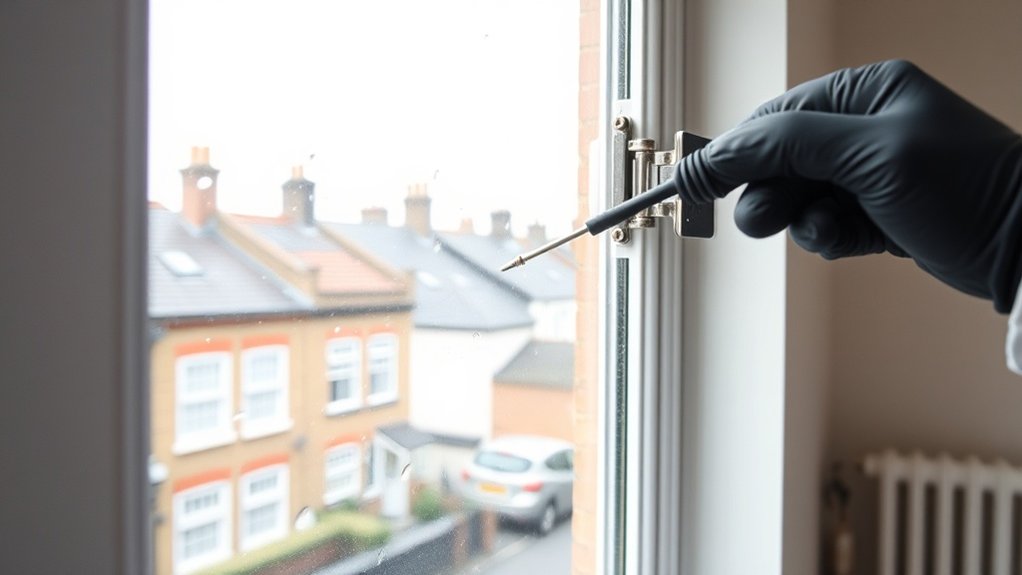
Most uPVC windows in Burnt Oak start to show their age in the same ways: a sash that catches on the frame, a handle that will not turn fully, a cold draught at the edge, or fog trapped between the panes. Lubricating hinges, nudging a friction stay or swapping a handle are jobs you can do yourself. A dropped sash, a twisted frame, a blown sealed unit or a failed gearbox needs a specialist. Typical uPVC window repair costs run from around £45 to £400 per window depending on the hardware and glass, and this page shows you how to pick the right repair instead of paying for a new window.
Key insights
- The usual faults are misted glass units, perished gaskets, dropped sashes, stiff hinges and multi-point locks that no longer line up.
- Minor hardware adjustments in Burnt Oak cost roughly £45 to £85; a new double-glazed unit or partial frame repair is more like £160 to £400 or above.
- Lubrication, small hinge and handle adjustments and simple draught seals are safe DIY jobs; frame distortion, failed locks and blown units are not.
- While the sash is apart, ask about low-E or acoustic glass, better gaskets and trickle vents to lift performance without a new window.
How to Tell If Your uPVC Windows Need Repair
Judge a uPVC window by how it works, not how it looks. If the sash still catches, the hinges drift or the locking points miss their keeps after you have cleaned and oiled everything, the hardware is worn or the frame has moved.
Look at the gap between sash and frame all the way round. A gap that is wider at one corner than another means the gaskets have lost their compression or the frame is out of square. On a cold day, hold the back of your hand near the edges; a steady draught points to seals that have failed or a sash that is not pulling tight. Check the glazing beads, mullions and any Georgian bars too. If they move, rattle or show a water trail beneath them, the fixings or perimeter seals have failed.
The Most Common uPVC Window Problems in Burnt Oak Homes
The same handful of faults turns up across Burnt Oak, HA8 time after time. The most frequent is a misted double-glazed unit, where the perimeter seal has broken down and condensation forms between the panes, taking the insulation and the view with it. Friction stays wear next, letting the sash drop, scrape or sit out of line with the frame.
Espagnolette locks and gearboxes seize or jump their track, so the window neither locks nor opens cleanly. Rubber gaskets go hard, shrink or pull out of their groove and let in draughts and noise. On south-facing elevations, sun and traffic grime yellow the frames and dry out the seals. Handles work loose on their spindles, keeps shift, and the sash no longer closes with enough pressure to keep the weather out.
DIY Quick Fixes vs Professional uPVC Window Repair
Lubricating hinges, adjusting friction stays and sealing a small draught gap are within reach of most homeowners, as long as you use the right products and stay within the manufacturer's adjustment limits. A failed glass unit, a warped frame, a jammed multi-point lock or any sign of structural movement is a job for a professional who can restore security and meet current Building Regulations.
Common DIY Repair Tasks
The DIY list covers draughts, stiffness and cosmetic wear, nothing that affects the strength of the frame. A sash that has dropped slightly can often be lifted back by adjusting the friction hinges and tightening their fixing screws. Draughts frequently disappear once you pull out hardened gasket and press in a new length. A wobbly handle can be re-seated or replaced, provided the new spindle matches the length your gearbox needs. For stiff operation, clean the locking points and stays and spray them with silicone; avoid oil-based products, which attack the plastic and the seals.
When Experts Are Essential
The moment a fault goes beyond alignment, lubrication or a new gasket, you need a qualified Burnt Oak uPVC repair engineer. A sash that has dropped on its hinges, a frame that has bowed, stress cracks at the welds, corroded steel reinforcement or a blown sealed unit are beyond sensible DIY. A professional knows which profile systems and hardware were fitted across Burnt Oak in each decade, so they can source the right gearbox, friction stay or locking cam and set the compression back to factory tolerances, using warm-edge spacers and compatible sealants so the repair keeps the window within Building Regulations.
uPVC Window Repair Costs in Burnt Oak
The final figure for a repair in Burnt Oak, HA8 moves with the size of the window, access, the hardware specification, the glass type (standard, low-E or laminated) and whether the frame or sash itself needs work. Knowing those cost drivers lets you compare quotes properly.
Typical Repair Price Ranges
uPVC window repair costs in Burnt Oak fall into three fairly predictable bands. Minor hinge, handle or lock adjustments typically cost around £45 to £85 per window and put the window back into smooth working order without any invasive work. Mid-range jobs such as a new lock, a pair of friction stays or a full set of gaskets usually come in between about £85 and £160, depending on sash size and access. The larger jobs, new double-glazed units or a partial frame rebuild, generally run from around £160 to £400 or more per window for sealed unit replacement.
Factors Influencing Repair Costs
The main factors are the condition of the frame, how complex the hardware is, and whether the glass unit has failed or only lost its edge seal. A standard friction stay, espagnolette or shootbolt is cheap to source; an obsolete gearbox or hinges for an oversized sash are not. Costs rise when damaged beads, warped profiles or a blown unit mean the window has to be deglazed, re-packed and reset with the correct packers and sealant. Upgrades such as low-E glass add to the materials bill, though the labour is much the same, and a window above a shop front or a flat needing a tower takes longer.
Fixing Sticking or Jammed uPVC Window Sashes
A uPVC sash that sticks or jams usually has one of three causes: the frame or sash has distorted, the hardware is fouling, or gaskets and paint have crept into the opening gap. Measure the gap around the sash first; if it tapers, the hinges or frame are out of line. The repair then involves small adjustments to the friction hinges, keeps and espagnolette strikers, followed by a silicone lubricant that will not pick up grit.
Next the edge of the sash is cleaned back to remove hardened dirt, chalky oxidation and paint runs. If the sash still rubs, a sliver can be taken off the uPVC or the glass packers moved so the sash stops twisting. Where a bowed or blown unit is forcing the sash out of shape, a new glass unit puts the geometry right.
Repairing Draughty uPVC Window Frames and Failing Seals
A draughty uPVC frame almost always comes down to perished gaskets, a failed sealant joint or a slight twist in the frame that has opened an air path. Before any repair, work out whether the leak is at the external perimeter seal, at the glazing unit seals or between sash and frame.
Common Causes Of Draughts
uPVC windows are designed to be airtight, so a draught means something specific has failed. Most often the gasket compression has relaxed with age, a bead has not been seated properly, or the sash sits slightly out of square so the seals touch on one side and not the other. Other causes include frames that have twisted with thermal movement, rubber that has gone hard, and hinges or keeps that no longer pull the sash evenly onto its seals. In older Burnt Oak, HA8 houses, settlement and wind loading on exposed walls make all of these worse.
Resealing And Frame Repairs
Old perimeter silicone, dirty glazing tape and distorted gasket are stripped out first. New EPDM gaskets, a low-modulus neutral-cure silicone and, where the beads allow, fresh glazing packers then square the sash up to the frame again. The frame is checked for twist, bow and dropped hinges, and the friction stays, keeps and cams are adjusted so the sash closes evenly onto the new seals. Where the uPVC has shrunk or cracked, plastic welding or an insert trim profile is usually enough; a new frame is rarely needed.
Dealing With Condensation and Misting in uPVC Double Glazing
The location of the water tells you the cause. Mist on the room side is a ventilation problem; mist between the panes means the edge seal has failed and the argon has gone, so the unit needs deglazing and replacing, not cleaning. A proper assessment covers:
- Where the moisture sits: inside the room, in the cavity or on the outer face.
- The condition of the spacer bar seal, drainage slots and glazing tape.
- How the room is ventilated and whether the reveals are cold bridges.
- Whether to upgrade to low-E glass when the failed unit is replaced.
uPVC Lock, Handle and Hinge Repairs for Better Security
A uPVC window that binds, drops or will not lock fully leaves the property easier to force and wears the remaining hardware faster. The engineer realigns the sash, resets the keeps and adjusts hinge friction so the locking cams bite cleanly. Worn parts are swapped for high-security gearboxes, reprofiled keeps and stronger handles with anti-drill backplates and a correctly sized spindle. Done well, the same work tightens the gasket seal, so the window is warmer and quieter as well as more secure, and hardware tested to PAS 24 brings an older frame up to the standard expected of new windows.
When uPVC Window Repair Is Enough and When Replacement Makes Sense
Nearly every uPVC fault can be repaired, but there is a point at which propping up a failing frame stops being good value. A sash slightly out of line, a set of tired gaskets or worn hardware justify repair every time. Warped profiles, rusted steel reinforcement or early single-chamber frames that cannot get near modern U-values are a different matter, and a new window is the better buy. Replacement also makes sense if you want features such as integral blinds or slim Georgian bars that an old frame cannot carry. Weigh up:
- How much air the window leaks
- Visible twist or bow in the frame
- How often glass units have failed
- Whether modern locks and hardware can be fitted
It forms part of the window repair service we run across Burnt Oak. If this is not quite what you need, we also cover window draught proofing and sash window repair.
Frequently Asked Questions
How Do uPVC Window Repairs Affect My Home’s EPC Rating and Energy Performance?
Repairs that cut air leakage and restore the glass make a real difference to how the house performs. New gaskets, correctly adjusted hardware and a replacement low-E sealed unit all reduce heat loss, so rooms hold their temperature and the boiler runs for less time. If you replace the glass, keep the specification and the FENSA or equivalent certificate: an assessor can then record the improved glazing, which can help the rating.
Can I Get uPVC Window Repairs Covered Under My Home Insurance Policy in Burnt Oak?
Sometimes, depending on the cause. Home insurance covers sudden insured events such as storm damage, impact, vandalism or a break-in, not wear and tear, so a failed seal or a worn hinge is down to you. If the damage was sudden, photograph it before any repair, get a contractor's report describing the cause of damage and an itemised estimate, and ask the insurer to confirm cover in writing before you instruct the work.
Are There Specific Burnt Oak Building Regulations for Repairing uPVC Windows in Conservation Areas?
Building Regulations are the same everywhere in England: any replacement glass or window must meet Approved Document L, and a registered installer certifies it. Planning control is what changes in a conservation area. Like-for-like repairs are generally fine, but if an Article 4 Direction applies, replacing windows or changing their appearance may need planning permission. Timber-look profiles with slim sightlines usually satisfy the planners.
How Do uPVC Window Repairs Impact Noise Reduction in Homes Near Busy Burnt Oak, HA8 Roads?
Noise travels through the same gaps as draughts, so restoring airtightness is the first and cheapest gain. When the glass is replaced, specify an acoustic laminated unit with panes of different thickness; it is the single biggest improvement available in the existing frame. For homes right on the main road through Burnt Oak, secondary glazing or acoustic trickle vents add a further step without changing the outside of the window.
Summary
uPVC windows keep the Burnt Oak weather out only while the seals, hinges and locks are doing their jobs. Catch wear early, use a specialist for anything beyond basic adjustment, and weigh repair against replacement on the condition of the frame rather than the age of the window. Call us for a free survey and a written quote on any uPVC window repair in Burnt Oak.